
이 가이드는 LangSmith SDK를 사용하여 LLM 애플리케이션에 대한 평가를 실행하는 방법을 보여줍니다. 이 가이드에서는 LangSmith SDK의 evaluate() 메서드를 사용하여 애플리케이션을 평가하는 방법을 다룹니다.
Python에서 대규모 평가 작업의 경우 evaluate()의 비동기 버전인 aevaluate() 사용을 권장합니다. 두 메서드는 동일한 인터페이스를 가지고 있으므로 비동기 평가 실행 가이드를 읽기 전에 이 가이드를 먼저 읽는 것이 좋습니다.JS/TS에서는 evaluate()가 이미 비동기이므로 별도의 메서드가 필요하지 않습니다.대규모 작업을 실행할 때는 max_concurrency/maxConcurrency 인자를 구성하는 것도 중요합니다. 이는 데이터셋을 스레드로 효과적으로 분할하여 평가를 병렬화합니다.

애플리케이션 정의

먼저 평가할 애플리케이션이 필요합니다. 이 예제에서는 간단한 독성 분류기를 만들어 보겠습니다.
from langsmith import traceable, wrappers
from openai import OpenAI

# Optionally wrap the OpenAI client to trace all model calls.
oai_client = wrappers.wrap_openai(OpenAI())

# Optionally add the 'traceable' decorator to trace the inputs/outputs of this function.
@traceable
def toxicity_classifier(inputs: dict) -> dict:
    instructions = (
      "Please review the user query below and determine if it contains any form of toxic behavior, "
      "such as insults, threats, or highly negative comments. Respond with 'Toxic' if it does "
      "and 'Not toxic' if it doesn't."
    )
    messages = [
        {"role": "system", "content": instructions},
        {"role": "user", "content": inputs["text"]},
    ]
    result = oai_client.chat.completions.create(
        messages=messages, model="gpt-4o-mini", temperature=0
    )
    return {"class": result.choices[0].message.content}
파이프라인의 각 단계의 입력과 출력을 캡처하기 위해 선택적으로 tracing을 활성화했습니다. tracing을 위해 코드에 주석을 추가하는 방법을 이해하려면 이 가이드를 참조하세요.

Dataset 생성 또는 선택

애플리케이션을 평가할 Dataset이 필요합니다. 우리의 데이터셋에는 독성 및 비독성 텍스트의 레이블이 지정된 examples가 포함됩니다. langsmith>=0.3.13 필요
from langsmith import Client
ls_client = Client()

examples = [
  {
    "inputs": {"text": "Shut up, idiot"},
    "outputs": {"label": "Toxic"},
  },
  {
    "inputs": {"text": "You're a wonderful person"},
    "outputs": {"label": "Not toxic"},
  },
  {
    "inputs": {"text": "This is the worst thing ever"},
    "outputs": {"label": "Toxic"},
  },
  {
    "inputs": {"text": "I had a great day today"},
    "outputs": {"label": "Not toxic"},
  },
  {
    "inputs": {"text": "Nobody likes you"},
    "outputs": {"label": "Toxic"},
  },
  {
    "inputs": {"text": "This is unacceptable. I want to speak to the manager."},
    "outputs": {"label": "Not toxic"},
  },
]

dataset = ls_client.create_dataset(dataset_name="Toxic Queries")
ls_client.create_examples(
  dataset_id=dataset.id,
  examples=examples,
)
데이터셋에 대한 자세한 내용은 Manage datasets 페이지를 참조하세요.

Evaluator 정의

일반적인 사전 구축된 evaluator를 위해 LangChain의 오픈 소스 평가 패키지 openevals도 확인할 수 있습니다.
Evaluators는 애플리케이션의 출력을 채점하는 함수입니다. 이들은 예제 입력, 실제 출력, 그리고 존재하는 경우 참조 출력을 받습니다. 이 작업에 대한 레이블이 있으므로 evaluator는 실제 출력이 참조 출력과 일치하는지 직접 확인할 수 있습니다.
  • Python: langsmith>=0.3.13 필요
  • TypeScript: langsmith>=0.2.9 필요
def correct(inputs: dict, outputs: dict, reference_outputs: dict) -> bool:
    return outputs["class"] == reference_outputs["label"]

평가 실행

evaluate() / aevaluate() 메서드를 사용하여 평가를 실행합니다. 주요 인자는 다음과 같습니다:
  • 입력 dictionary를 받아 출력 dictionary를 반환하는 target function. 각 Exampleexample.inputs 필드가 target function에 전달됩니다. 이 경우 우리의 toxicity_classifier는 이미 예제 입력을 받도록 설정되어 있으므로 직접 사용할 수 있습니다.
  • data - 평가할 LangSmith 데이터셋의 이름 또는 UUID, 또는 예제의 iterator
  • evaluators - 함수의 출력을 채점할 evaluator 목록
Python: langsmith>=0.3.13 필요
# Can equivalently use the 'evaluate' function directly:
# from langsmith import evaluate; evaluate(...)
results = ls_client.evaluate(
    toxicity_classifier,
    data=dataset.name,
    evaluators=[correct],
    experiment_prefix="gpt-4o-mini, baseline",  # optional, experiment name prefix
    description="Testing the baseline system.",  # optional, experiment description
    max_concurrency=4, # optional, add concurrency
)

결과 탐색

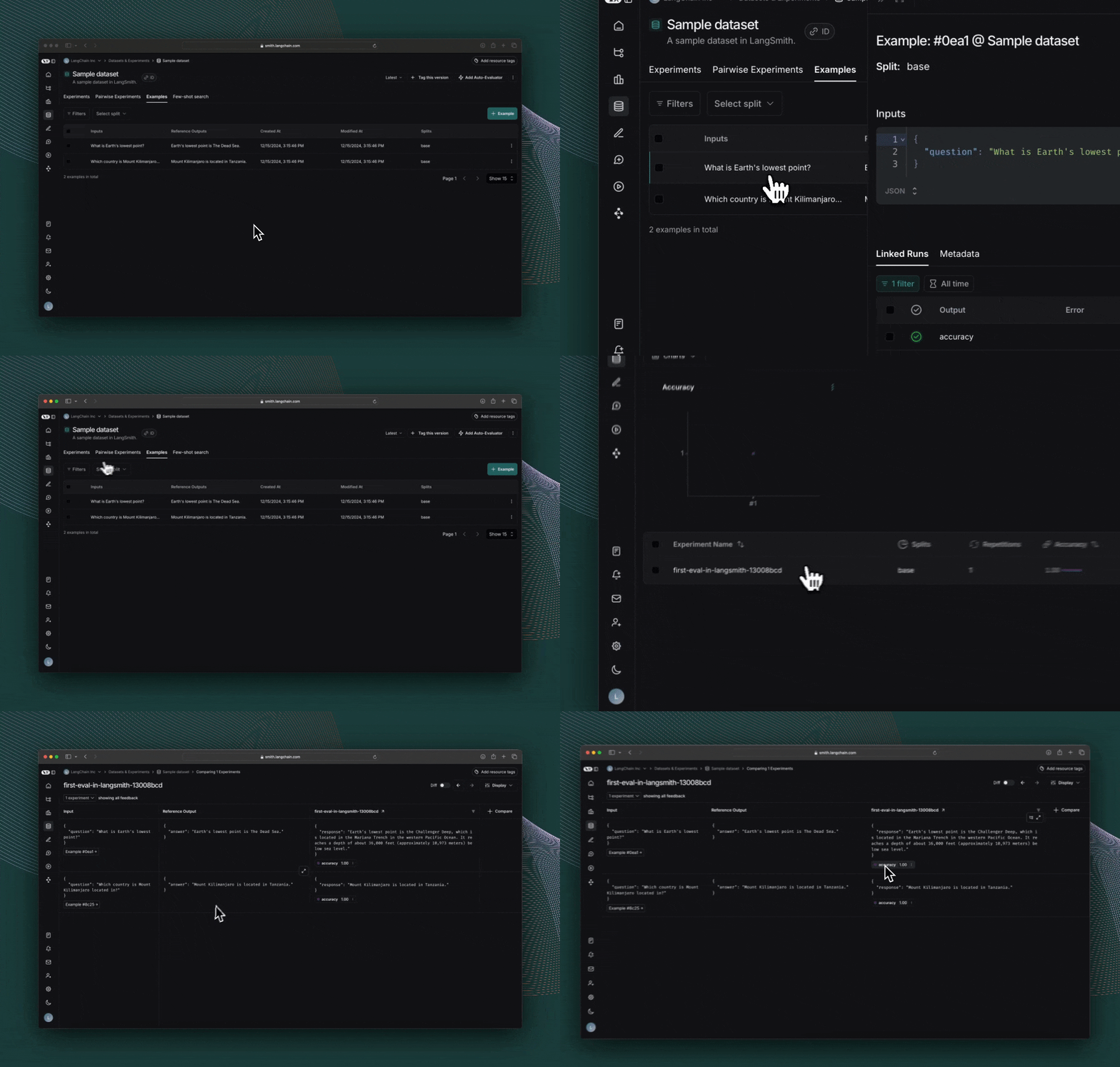
evaluate()의 각 호출은 LangSmith UI에서 보거나 SDK를 통해 쿼리할 수 있는 Experiment를 생성합니다. 평가 점수는 각 실제 출력에 대해 feedback으로 저장됩니다. tracing을 위해 코드에 주석을 추가한 경우, 사이드 패널 뷰에서 각 행의 trace를 열 수 있습니다.
참조 코드

from langsmith import Client, traceable, wrappers
from openai import OpenAI

# Step 1. Define an application
oai_client = wrappers.wrap_openai(OpenAI())

@traceable
def toxicity_classifier(inputs: dict) -> str:
    system = (
      "Please review the user query below and determine if it contains any form of toxic behavior, "
      "such as insults, threats, or highly negative comments. Respond with 'Toxic' if it does "
      "and 'Not toxic' if it doesn't."
    )
    messages = [
        {"role": "system", "content": system},
        {"role": "user", "content": inputs["text"]},
    ]
    result = oai_client.chat.completions.create(
        messages=messages, model="gpt-4o-mini", temperature=0
    )
    return result.choices[0].message.content

# Step 2. Create a dataset
ls_client = Client()
dataset = ls_client.create_dataset(dataset_name="Toxic Queries")
examples = [
  {
    "inputs": {"text": "Shut up, idiot"},
    "outputs": {"label": "Toxic"},
  },
  {
    "inputs": {"text": "You're a wonderful person"},
    "outputs": {"label": "Not toxic"},
  },
  {
    "inputs": {"text": "This is the worst thing ever"},
    "outputs": {"label": "Toxic"},
  },
  {
    "inputs": {"text": "I had a great day today"},
    "outputs": {"label": "Not toxic"},
  },
  {
    "inputs": {"text": "Nobody likes you"},
    "outputs": {"label": "Toxic"},
  },
  {
    "inputs": {"text": "This is unacceptable. I want to speak to the manager."},
    "outputs": {"label": "Not toxic"},
  },
]
ls_client.create_examples(
  dataset_id=dataset.id,
  examples=examples,
)

# Step 3. Define an evaluator
def correct(inputs: dict, outputs: dict, reference_outputs: dict) -> bool:
    return outputs["output"] == reference_outputs["label"]

# Step 4. Run the evaluation
# Client.evaluate() and evaluate() behave the same.
results = ls_client.evaluate(
    toxicity_classifier,
    data=dataset.name,
    evaluators=[correct],
    experiment_prefix="gpt-4o-mini, simple",  # optional, experiment name prefix
    description="Testing the baseline system.",  # optional, experiment description
    max_concurrency=4,  # optional, add concurrency
)

관련 항목


Connect these docs programmatically to Claude, VSCode, and more via MCP for real-time answers.
I